Names define the way we see the world. Yes, they do seem like a piece of random information, something hard to remember for many of us now that our phones and the internet have come into the picture. However, without names, we’d have a hard time remembering a lot of things.
Names of people are often based on religion, region, ancestral profession, caste, clans and so on. Names of places are also regional, ending with tags like Pur, Nagar, Puram, Lore in different parts of India, and Ville, Field, Ham in different parts of the western world. Names for the same thing might change every few kilometers based on its origins, its migration and a lot more. For the same reason, things in far away places might have the same name.
However, when it comes to fiction, you don’t have these preexisting factors to facilitate the nomenclature. You might be thinking that hold on, This isn’t real life, right? Just make up the names with whatever you like.
And that, my friend, is where the problems of naming start. To know how to solve it, listen to the latest episode of my podcast Read Write Insight on the topic.
If this section does not appear properly, please reload the page.
You can send me your feedback as voice messages on the Anchor platform.
In the first episode of my podcast, we discussed the merits and demerits of reading physical and digital books, and how each one of them has their unique advantages, however, this week we’re talking about reading that doesn’t involve reading at all. That’s because you don’t read audiobooks, you listen to them.
During the lockdown last year, many of us got our hands dirty with chores around the house. It is during that time that I started exploring the world of audio entertainment with sincerity. Maybe you did it too – and why wouldn’t you? Just plug your headphones in, tune in to your favourite podcast or audiobook, and make washing dishes or going for a run interesting for a change.
When it comes to podcasts, you can listen to them for free. However, audiobooks are different in this respect – they usually need an upfront payment or a subscription of some kind to be accessible, and that makes it all the more important to know whether you’re going to like them or not.
So, how do you do that? One way is to try them for yourself with free trials for services like Audible. That’s why I did before actually taking a subscription for myself, and this episode is about how my experience was. We examine the obvious and not-so-obvious pros and cons of the format, as well as some interesting insights about some unique narrators.
If you’ve been waiting to try audiobooks, then this is the episode for you.
Please refresh the page if this section shows an error
You can send me your feedback as voice messages on the Anchor platform.
Writing fiction is its own discipline, one that many have mastered over time to give us some of the best novels across genres, eras and languages. However, when you’re starting on a novel, one of the first questions you need to answer is quite simple, yet quite confusing – how exactly do you plan to do it?
If you think about it, there are two broad strokes in which you can paint this problem – either you have a plan, or you don’t have one. Either you look for a way to plan your book before you write the first word, or you start writing on the back of one (or many) great ideas and see where that takes you.
The first approach will take you down the road of outlining a.k.a plotting. With this method, you try to develop a blueprint for your book first, ensuring that everything’s in order before you commence the first draft. As you can understand, many writers have already done this quite succesfully – which means that you have access to a treasure trove of resources in the form of popular plot structures that have been loved and mastered over the years.
On the other side of the fence lies discovery writing a.k.a pantsing. Informally known as writing by the seats of your pants, this method is about doing what it says on the cover. You take the idea(s) you’re most excited about and flesh them out in the form of scenes, chapters or any other method that suits you. Once you have something cohesive, you can start on the book and see where it takes you. To be honest, you can start with much lesser too. The abstract nature of this method makes it a bit hard to explain or teach. However, things like writing sprints, mindmaps and brainstorms are your best friends.
In this episode of the podcast, we examine the nuances of each method and how you can pick one to go ahead with your book, based on my personal experiences with the novel I am working on right now.
Please reload the page if this section shows an error
If you like this podcast, please hit the follow button to show some love.
My first encounter with digital books was quite early on in life. I got my own personal computer when I was 12, and with that, I started trying to read stories on PDFs and Word files. However, physical books have always had a special place in my life, and it wasn’t until much later that I had to start sharing my love for books among multiple formats.
I received the Kindle base model in the year 2016 as a farewell gift from my colleagues. I was obviously overjoyed and I tried to start reading on it immediately. However, something did not click. Over the next few years, that Kindle would fine itself in various states of neglect, even a long period where it was with a friend who had to remind me that I owned a Kindle when he returned it to me.
Last year, in 2020, as the lockdown started, I found myself using the Kindle more. Call it a need to try something new or the lure of certain Kindle book deals, but this time, something was different. I started off with Brandon Sanderson’s The Final Empire, Book 1 of the Mistborn Trilogy, and finished that soon after. This didn’t go unnoticed, and I received a Kindle Oasis as a gift from Deya for my birthday.
If the lockdown was the tipping point, the Oasis was the floodgates being opened. I was reading ebooks like never before. Currently, between ebooks and audiobooks, I am guilty of not engaging with a physical book for the longest time.
It is this transformation that I’ve tried to capture in the first episode of my podcast Read Write Insight. In this, I talk about what the journey felt like, what are the specific merits and demerits that either format carries for me, and what this tells me about my future reading habits. Here’s a link to the episode:
Please refresh the page if the Spotify player shows an error
Let me know your thoughts on the topic in the comments below. What works for you – ebooks or physical books? What are your reasons for liking one over the other?
Anyone who knows me more than just as an acquaintance has probably encountered my love for reading. My passion, and my current profession, are in the domain of writing. Both of these interests were born from a deeper connection to the world of storytelling, as a reader and as a writer. While I’ve been consuming books, mostly fiction, since I was too young to remember, I did start writing my own prose and poetry when I was 11, as part of an assignment from school.
Since then, I’ve been trying to find new ways to tell stories – about magic, about science, about life and all that it has to offer.
Today, I am starting a podcast to continue that journey in exploration of the world of storytelling. In this podcast, I want to explore questions and topics from my personal experience in the domain of reading and writing, with insights from life all around me. Joining me will be guests from all walks of life who have touched mine in some way or the other, and who have been interesting co-passengers on this journey at some point.
Introducing this podcast will not be complete without mentioning one of the biggest reasons, and roadblocks, that I have faced for doing so – my trials with speech defects. Ever since I was a child, I have encountered a stammer whenever I’ve been nervous, something that I still face to an extent, and this has often led me to a bad place in terms of mental health.
Over the years, I’ve tried to acknowledge and improve my relationship with this problem by facing opportunities to speak publicly head on – including giving the best presentation during a professional training, trying my best at job interviews, and even having my own weekly show on national radio in three different cities.
This podcast is an effort in the same direction on the journey to reclaim myself from my speech defect.
With that, here’s the podcast, live now on Spotify.
This is an embed for the entire podcast, which will update over time with newer episodes
P.S Anchor won’t let me update the cover art at the moment. Which is why I have included it as the featured image in this post as well.
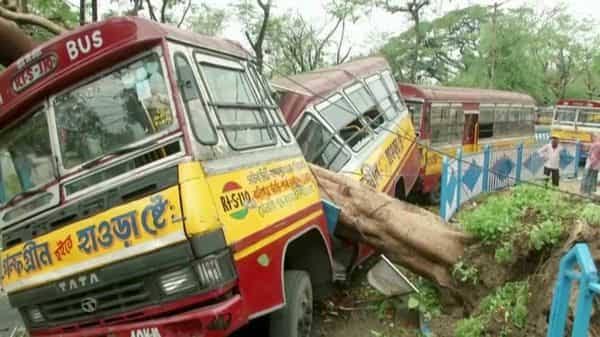
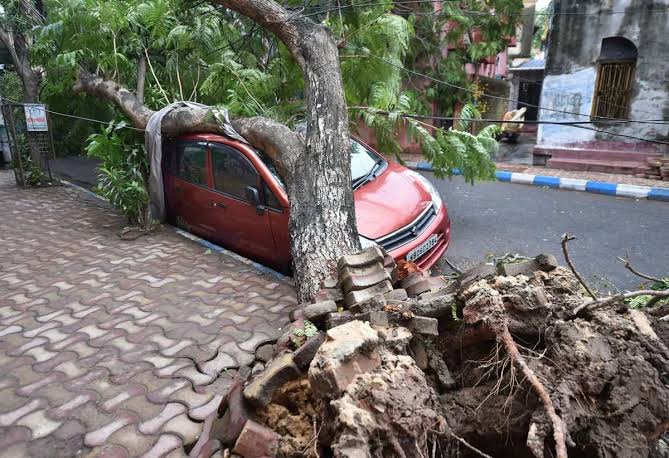
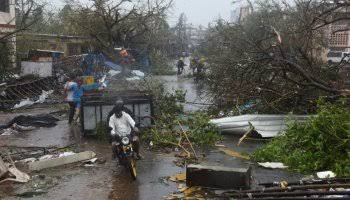
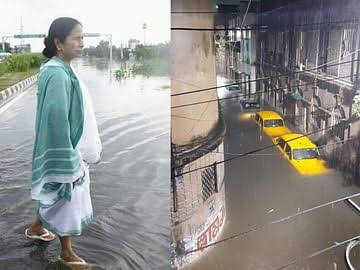
Normally, I would start a blog post like this with ‘ everyone knows how bad the situation with the Amphan cyclone is ‘, but the trouble is that they don’t. Hardly anyone beyond people with direct connections to West Bengal and Orissa are talking about it. In a world where the relevance of events is often measured in social media trends, you’ll have to scour the depths of these platforms to find an overall conversation on this disaster.
There’s no putting it lightly – this has destroyed a large chunk of West Bengal. It has set parts of the state years back, if not a decade. As a state, West Bengal is full of cottage industries and enterprises run by handicraftsmen, that did not survive this storm. Between the COVID-19 pandemic and a category-5 supercyclone (the first of this century to make landfall in India), many livelihoods and lives have been razed down to the ground by nature’s fury.
We can start pointing fingers almost immediately. At the lack of attention from national media busy discussing buses & politics like your overweight racist neighbour, at the lack of empathy on social media busy meme-ing on the latest ‘escape from your grim reality to this grim reality’ show to stream, at a government machinery that can organise election rallies wayyy better than relief efforts for the disadvantaged majority or minority. We can keep pointing fingers all day, but that’s not what we do. That’s not who we are. And that’s not what we will let this turn of events make us.
After all, weren’t we the ones guilty of much of the above when the trouble was far from the doors of our homeland? Sometimes, not too distant neighbourhoods faced worse deluges that garnered almost no national sympathy, including ours. On the other hand, routine drowning and deaths in a maximum city every monsoon has become something we have internalised, despite all the attention and conversation it gets year on year.
Yes, rage. Rage against all of the above, but by making a difference. If you can, at least donate to the West Bengal State Emergency Relief Fund on Google Pay – it’s easier than sharing that edited post on Instagram. Reach out to people you know on the ground, people who’ve faced the worst and are still standing, who can help you reach out directly to those who’ve fallen. Your barir kajer lok, Your parar chayer dokan’er dada, your parents’ office staff, your college canteen’er kakima, that tour guide on your last trip to the Sunderbans, juniors living alone in hostels and more. More than ever, people are scared. There’s a quiver of uncertainty even in the most steadfast of voices. Even if all you can provide is consolation and a patient ear, it might just give someone the strength to face another day and come out stronger.
We’ll survive, like we’ve done countless times in the past. Or atleast, our collective identity will. As a race, we’ve survived nuclear bombings at our own hands, so it will take more than a cyclone, more than polito-religious-agenda driven dipshits, more than the apathy of the majority to bring us down, if at all. But remember, the nuke left a mark. This will too.
Remember, regardless of your connection to the state & its state today, the aftermath is something every single one of us will have to live with someday.
 Arnab Mukherjee