
Probably there is no other phrase more popular in the Indian products and goods market. Although most of us remember this phrase being famously etched on the back of our more fancy toys, this phrase has been synonymous with cheap yet fancy products being sold in smaller shops (not showrooms) that provided no guarantee for performance and durability.
Then came the “chinese phones”. When Nokia and Motorola were busy ruling over the Indian mobile phone market, China was manufacturing and shipping phones into the Indian market which either were knockoffs of the brands mentioned earlier or something completely different. How many of you remember those bright lights and extremely loud speakers on a peculiarly shaped cellphone your local panwala, and gradually, someone in your friend circle was using and recommending? I myself owned one which was the size of a lighter yet had a VGA camera, dual sim support, MicroSD card slot, color screen and a music and video player. It cost me Rs.2000 roughly 4 years back.

Eventually, Samsung had arisen with its vast array of touch screen wonders. Soon, the entire market was going crazy over touchscreen phones and owning one of those was a definite symbol of affluence and prosperity. This changed with Micromax, an Indian mobile manufacturing startup which made owning cheap but good phones a reality for most of the rural and some of the urban population. Even then, owning or buying a comparitively expensive Micromax phone used to be made fun of occasionally.
Then, an explosion happened. China upped its game. E-commerce helped. All of a sudden, the smartphone market was flooded by manufacturers with names and models so unfamiliar to the common people that their mere mention brought out laughs. But the last laugh was to be theirs as a company like Xiaomi becomes the third largest mobile phone vendor in the world and Oneplus directly challenges Apple on the technology front. Now, thanks to the breaking of the social stigma regarding Chinese phones, almost everyone has a more than decent smartphone with capabilities comparable to those of their high end brethren.
Interesting tale? Wasn’t it? It isn’t over yet.
We often look at the costs of these phones and wonder how are they making them so cheap yet competing with the top brands. Do we ever actually stop and try to analyze the facts to determine the answer to that question? I guess not, as we are too busy staring at our new cheap smartphones and waiting for the next version.
Let me tell you the prequel to the story written above. China is one of the world’s largest manufacturers. In the last 20 years, their share of the world’s manufacturing market has grown manifolds at an alarming rate. According to quite recent statistics, 70.6% of the world’s mobile phones are manufactured in China. Putting that statistic into perspective versus the population of China, more than 800 phones are manufactured per 1000 people in China. And that’s just phones. The rest of the electronics industry also depends similarly on the magical anvil of Chinese manufacturing to produce its priced digital swords and armors for conquering the world. Let us have a look at the anvil.
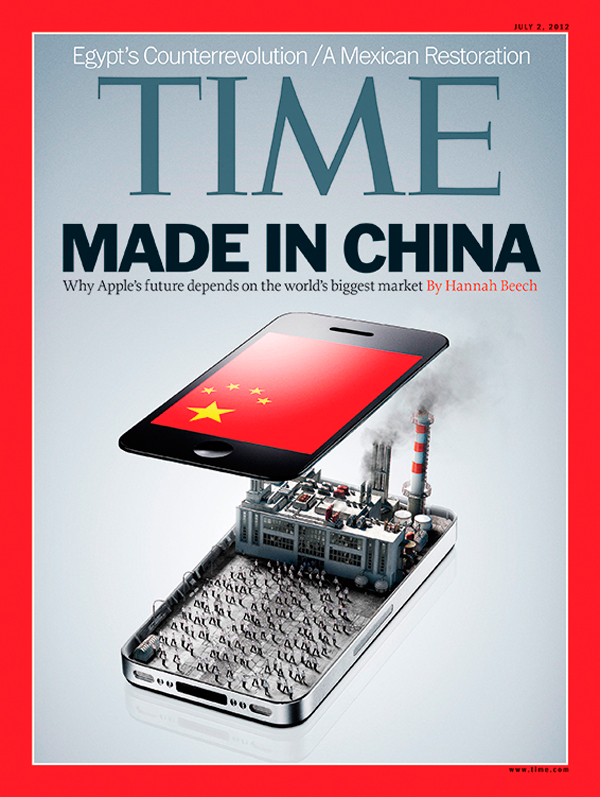
TIME Magazine Cover
(Credit: PHOTO-ILLUSTRATION BY ALEXANDER CRISPIN FOR TIME. CGI BY HAYRI ER)
When it comes to the world of phones, Apple forms the nobility among the general populace. Nothing but the best is expected from them. By now it is almost common knowledge that iPhones are mostly manufactured (and sold in a high number as well) in China. The company that manufactures them is Foxconn. In 2010 alone, 18 Foxconn employees attempted suicide. Fourteen were confirmed dead.
To put that into perspective, that is one of your colleagues trying to kill themselves, at their workplace every 20 days, and one succeeding every 26th day. And that is distinct from the 13 leukemia cases in Apple’s factories in China last year.
Would you accept that? No? Too bad. They have no option.
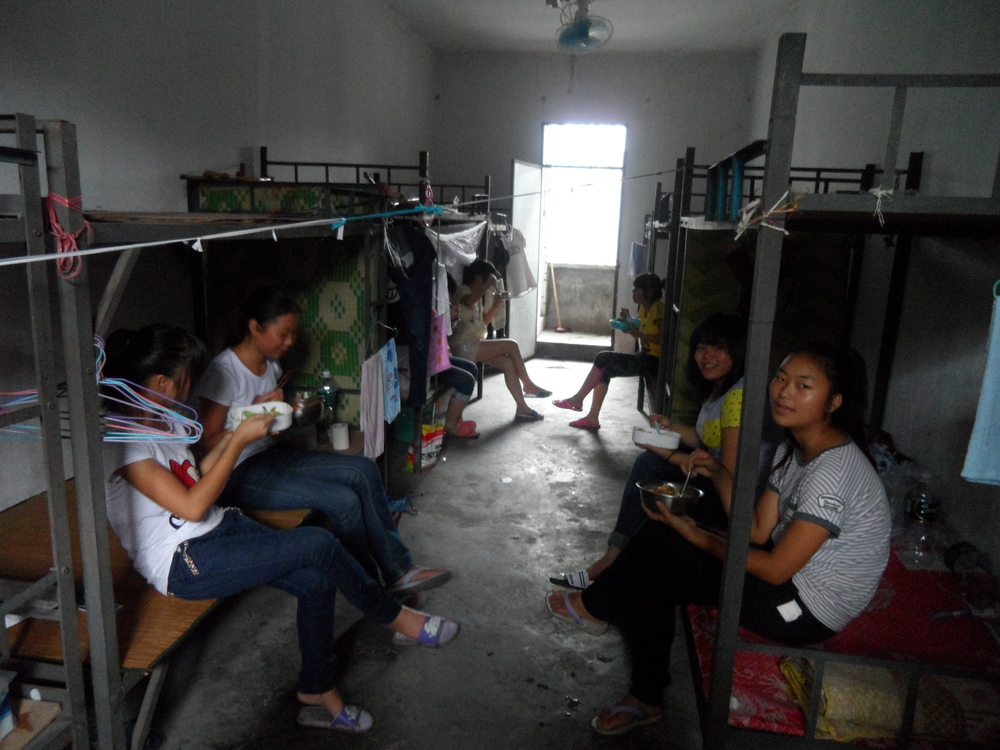
With working hours ranging between 11 to 13 per day, the little time they have is spent on resting. As many as 24 people are compelled to share a room so the concept of privacy is almost nonexistent. Random raids, specific freedoms regarding possessions, sleeping in the factory during a new product launch, cancelled lunch breaks to meet quotas, these are all part of the workplace and work culture at Foxconn’s manufacturing factories. Nearly half of Foxconn’s employees in China work at factories manufacturing Apple products. Some have even been found to employ child labour. Most have been found to be lacking in basic health and safety amenities. For those of you wondering why they are explicitly necessary, kindly have a look into the harmful gases emitted during any industrial operation involved in the manufacture of semiconductor chips.
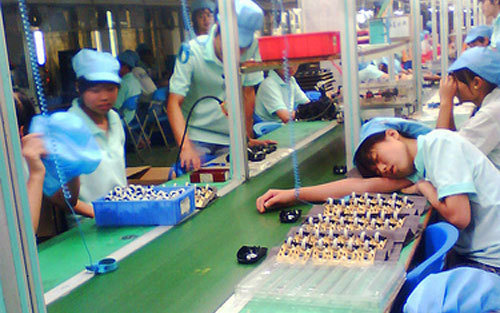
I could give you statistics. I could give you numbers. I could list down all the manufacturers in China and the conditions of their factories. But I wont. A life cannot be quantified in numbers. The lives of half a million workers and their families definitely cannot be explained in statistics.
And that is just one manufacturer.
All the android users out there have no reasons to smirk at apple. Samsung has been persistently in the firing line since 2012 up until as recent as last year for several issues in its factories in China ranging from child labor to improper working conditions. Most of these troubles have been shirked off their shoulders by the subtle cloak of sub-contracting which allows most parent companies to put the entire blame onto contracted firms, order a few audits, donate to a few charities and wash their hands off the deaths and ailments of thousands of lives.
What is even more alarming, is that these are the top names in the industry. Even though the others are catching up, native Chinese smartphone makers like Xiaomi, Meizu, ZTE, Coolpad, Oneplus have quite a long way to go before embedding themselves as deeply into our minds as the big two. Hence, the investigative eye directed at their manufacturing facilities can only wait for the show business currently going on to be over.
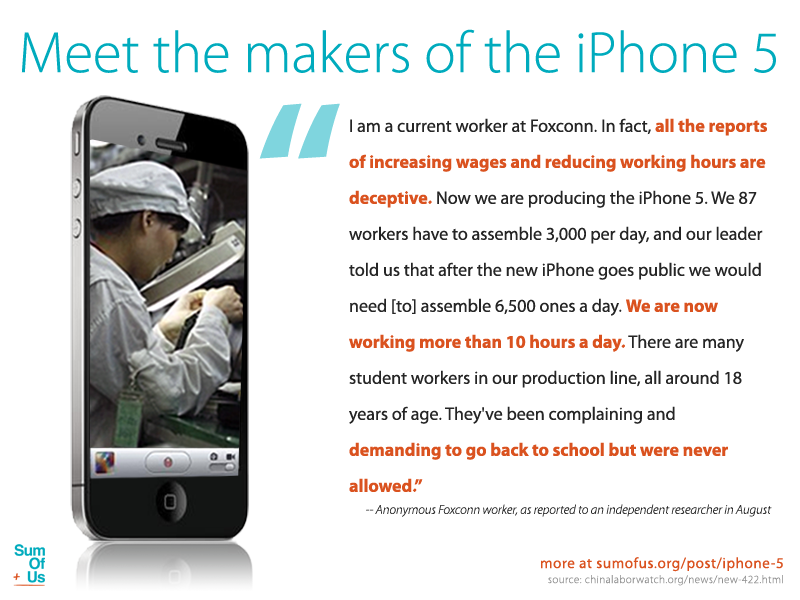
Source: chinalaborwatch.org
When I began writing this article, I set out with an intent to research this topic and provide cold hard statistics and facts. By now I have realized that human misery and agony cannot be quantified. Lives shuttered down forcefully into ghettos cannot be represented on pie charts and graphs. Deaths can be hidden, records erased. Especially when you are the most populated country on the planet with a reputation for secrecy.
Whenever the apathy of capitalism has faced the death of a child’s dreams, we all know what the outcome has been.
Oh wait! I have a notification.
Other Sources:
1. https://en.wikipedia.org/wiki/Foxconn_suicides
2. http://www.chinalaborwatch.org/report/90
3. http://www.nytimes.com/2014/07/11/business/international/children-found-working-at-samsung-supplier-in-china.html?_r=0
 Arnab Mukherjee